Punters tend to talk about the horse first and the jockey second, with the trainer often being forgotten altogether by many. In fact, it is the trainer that shapes everything that a runner does before it even reaches the track, deciding the likes of when a horse is fit to run, which races suit it, what trip it needs and what ground it will run best on.
At the biggest yards, that means well over 100 horses at once, which is why so many bettors look at a stable’s current form before they look at the horse itself, searching for the handlers whose runners turn up ready and well placed. A handful of trainers have done that job better than almost anyone in the history of the sport, and this page looks at the most famous of them.
Aidan O’Brien
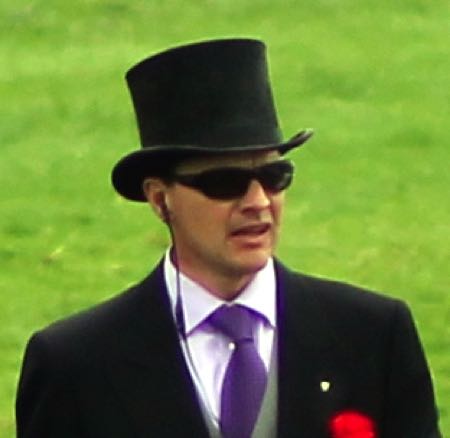
One of six children, Aidan Patrick O’Brien was born in County Wexford on the 16th of October 1969. His father, Denis, farmed and kept a small number of horses in training on the side. He worked for P J Flynn and then for Jim Bolger, riding as an amateur over jumps and becoming Ireland’s Champion Amateur in the 1993-1994 season. In 1993, he took over the licence of his wife, Anne-Marie, who had already been Champion Jumps Trainer, and he went on to head the Irish jumps table for five seasons in a row.
The star of those early years was Istabraq, who won three Champion Hurdles on the bounce between 1998 and 2000 for the owner JP McManus. In 1996, John Magnier invited him to take charge of Ballydoyle in County Tipperary, with O’Brien remaining the private trainer there for the Coolmore partners ever since. Desert King gave him his first Group 1 that autumn and the big flat prizes have followed ever since. In 2017, he sent out 28 Group or Grade 1 winners in a single calendar year, beating the world record of 25 that Bobby Frankel had set.
Christmas Day’s Derby win in the June of 2026 was his 12th victory in the race, which is a record for a trainer at the time of writing, and was also his 50th British Classic. Yeats, who won the Ascot Gold Cup four years running, and the 2024 Derby winner City Of Troy are amongst the best horses that he has handled, but it is a long and well-populated list.
Willie Mullins
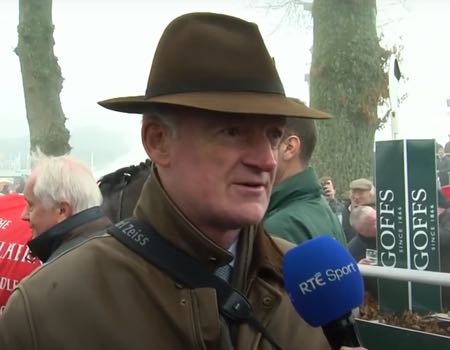

William Peter Mullins was born in Goresbridge, County Kilkenny, on the 15th of September 1956, and grew up in a house built around racing. His father, Paddy Mullins, was a trainer and his mother, Maureen, bred horses, so it was no surprise that Willie made his name first in the saddle. He won the Irish amateur riders’ title six times, with one of his best days as a rider including the Fox Hunters’ Chase at Aintree on Atha Cliath in 1983. He learned the training side as an assistant to his father and then to Jim Bolger before taking out his own licence in 1988.
Mullins was still riding in 1996 when he partnered Wither Or Which to win the Champion Bumper at Cheltenham. He trains his horses at Closutton, near Bagenalstown in County Carlow, and the yard has been Ireland’s champion stable for 18 seasons running, with 20 titles in all at the time of writing, according to Horse Racing Ireland. He is the most successful trainer in the history of the Cheltenham Festival, with 121 winners after the 2026 meeting. Gaelic Warrior’s success in the March of 2026 gave him a fifth Cheltenham Gold Cup, drawing him level with Tom Dreaper.
A month later, I Am Maximus won the Grand National for him, making it four wins in the race and three in a row after I Am Maximus had won it for the first time in 2024 and Nick Rockett raced home in first in 2025. He was also British Champion Trainer in 2023-2024 and 2024-2025.
Nicky Henderson
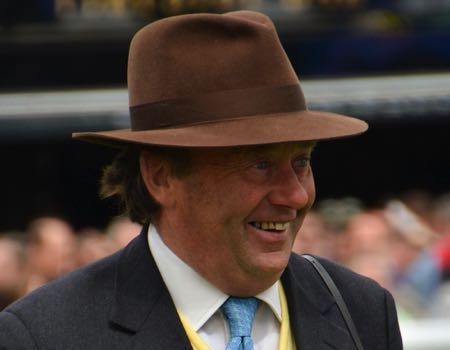
Johnny Henderson, whose work in founding the Racecourse Holdings Trust in the early 1960s helped to secure Cheltenham Racecourse’s future, was the father of Nicholas John Henderson, born on the tenth of December 1950. The Festival still honours his father through the Johnny Henderson Grand Annual Chase. Nicky was educated at Eton and rode as an amateur, winning the Fox Hunters’ at Aintree on Happy Warrior, whilst he learned the trade as assistant to Fred Winter from 1974.
He took out his own licence in 1978 and started at Windsor House Stables in Lambourn, later moving up the hill to Seven Barrows, the yard that he has made his own and where he still trains at the time of writing. See You Then gave him the first of three straight Champion Hurdles in 1985 and carried him to the trainers’ title in 1985-1986, then again in 1986-1987. He has been champion six times in all and holds the record for Champion Hurdle wins by a trainer with nine, the ninth coming from Constitution Hill in 2023.
His 78 Cheltenham Festival winners at the time of writing are the most by any British trainer, with only Willie Mullins able to boast more. Long Run and Bobs Worth won him the Gold Cup in 2011 and 2013, whilst Sprinter Sacre and Altior, who won a record 19 races in a row over jumps, took the Queen Mother Champion Chase twice apiece.
Paul Nicholls
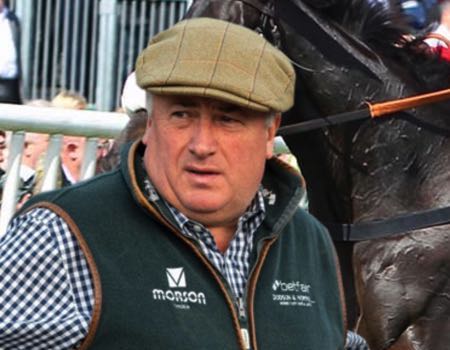
Paul Nicholls was born in Lydney, Gloucestershire, on the 17th of April 1962, but grew up in the village of Olveston, near Bristol. He started out as a conditional jockey with Josh Gifford in 1982 and then joined David Barons in Devon, where he became stable jockey and enjoyed his best days as a rider. He won the Hennessy Gold Cup at Newbury on Broadheath in 1986 and on Playschool the following year, with Playschool also winning him the Welsh National. Injury brought his riding career to a close in 1989 after 133 winners.
He then spent two years as assistant to Barons, which was a spell that included Seagram’s win in the 1991 Grand National. Nicholls took out his own licence on the first of November, 1991, renting stables at Manor Farm in Ditcheat, Somerset, from the dairy farmer Paul Barber and starting out with only eight horses. He went on to win the British Trainers’ Championship 14 times between 2005-2006 and 2022-2023. See More Business, Denman and Kauto Star, who won the race twice, gave him four Cheltenham Gold Cups, whilst Neptune Collonges won him the Grand National in 2012 by a nose.
That was the closest finish in the race’s history, which is a decent claim to have on your record when you consider that trainers try to get every last drop out of their charges. He has won the King George VI Chase at Kempton a record 13 times, with the list including five from Kauto Star, whilst the latest victory came from Bravemansgame in 2022.
John Gosden
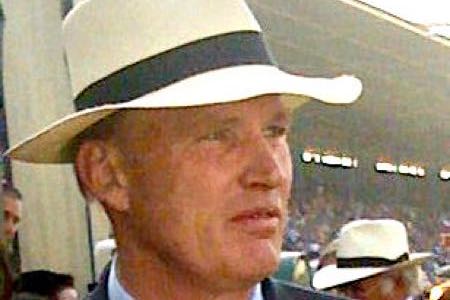

John Harry Martin Gosden grew up around Lewes, having been born in Hove on the 30th of March 1951. His father, Towser Gosden, trained horses such as Aggressor. After reading Economics at Cambridge, John became an assistant to Sir Noel Murless in Newmarket and then to Vincent O’Brien at Ballydoyle. That meant that he learned from two of the most successful trainers of the 20th century. In 1979, he began training in his own right in California, where he sent out more than 500 winners, amongst them the Santa Anita Handicap winner Bates Motel.
Sheikh Mohammed brought him back to England in 1989 to train from Stanley House Stables in Newmarket, later spending time at Manton before settling at Clarehaven. Gosden was Champion Trainer in Britain in 2012, 2015, 2018, 2019 and 2020, and he has shared a licence with his son Thady since 2021, the pair becoming the first joint licence holders to take the title when they won it in 2023. Enable is the horse most closely linked to his name, winning the Prix de l’Arc de Triomphe in 2017 and 2018 and adding the Breeders’ Cup Turf in the November of 2018.
There are other well-known horses also associated with him, such as Golden Horn, who won the Derby and the Arc in 2015, and Raven’s Pass, who had already given him the Breeders’ Cup Classic in 2008.
Gordon Elliott
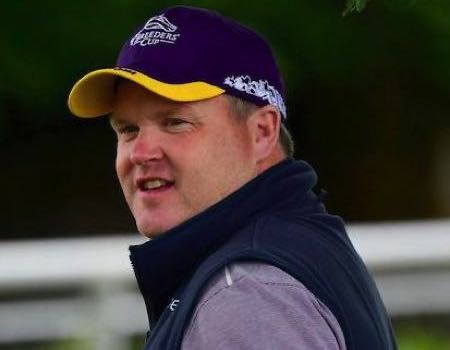
Born on the second of March 1978, and growing up in Summerhill, County Meath, in a family with no background in racing, Gordon Elliott’s father was a panel beater. At 13, he began working weekends and school holidays for the trainer Tony Martin, taking out an amateur rider’s licence at 16. He went on to ride around 200 point-to-point winners and 46 under rules, the biggest of them being King’s Road in the Champion Bumper at Punchestown in 1998. He also spent time riding for Martin Pipe in England, a trainer he has long regarded as a mentor, before injury ended his riding days at the end of 2005.
His first winner as a trainer came at Perth on the 11th of June, 2006, and within a year he had won the Grand National with the 33/1 shot Silver Birch, even though he had not saddled a single winner back home in Ireland at the time. In 2011, he bought Cullentra House near Longwood and turned it into a yard with room for more than 200 horses. Don Cossack won him the Cheltenham Gold Cup in 2016, before Tiger Roll landed the Grand National in both 2018 and 2019. Elliott was top trainer at the Cheltenham Festival in both 2017 and 2018.
In 2021, the Irish Horseracing Regulatory Board banned him for 12 months, with six suspended, after a photograph emerged of him sitting on a dead horse. That not only disgusted both those inside the world of racing and those outside of it, it also damaged his reputation for some time.
Charlie Appleby
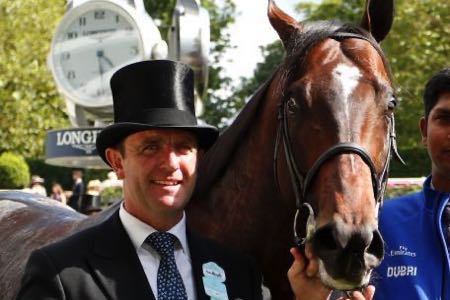
Charlie Appleby was born on the fifth of July 1975 and rode in point-to-points as well as picking up a handful of rides on the flat as an amateur, before his weight pushed him towards the training side of the sport. He worked for Susan Piggott and then for David Loder. When Loder joined Sheikh Mohammed’s Godolphin team in 1998, it opened the door to the operation that has gone on to shape his career. Over the next 15 years, he served Godolphin as a Travelling Head Lad, a Head Lad and an Assistant Trainer, working under Saeed bin Suroor and Mahmood Al Zarooni.
In the July of 2013, following Al Zarooni’s ban in a doping case, Appleby was put in charge at Moulton Paddocks in Newmarket. Within a few months, Outstrip had given him a first Group 1 win in the Breeders’ Cup Juvenile Turf. Masar then became the first Godolphin horse to win the Derby in 2018, with Adayar winning it for Appleby once more in 2021 before going on to take the King George VI and Queen Elizabeth Stakes. Appleby was British Champion Trainer in both 2021 and 2022.
Appleby has won the 2,000 Guineas three times, with Coroebus in 2022, Notable Speech in 2024 and Ruling Court in 2025, when Desert Flower also took the 1,000 Guineas for him. He spends the winter at Marmoom in Dubai and has won the Breeders’ Cup Turf three times.
Bob Baffert
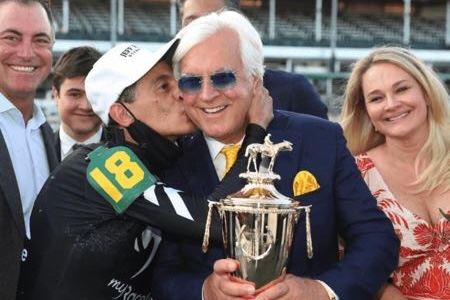
Born in Nogales, Arizona, on the 13th of January 1953, Bob Baffert was raised on a ranch close to the Mexican border, with his father breeding quarter horses alongside cattle. He rode in quarter horse races as a teenager and won his first sanctioned race at Flagstaff in 1970, but the riding career didn’t work out for him. Instead, he graduated from the University of Arizona in Animal Sciences and Racetrack Management, turning to training quarter horses, producing four champions including Gold Coast Express, the 1986 world champion.
His first thoroughbred winner, Flipper Star, came at Rillito in the January of 1979, later moving his operation to Southern California. Baffert has trained two winners of the American Triple Crown in American Pharoah in 2015 and Justify in 2018. His six Kentucky Derby wins match the record held by Ben Jones. His 17 wins in Triple Crown races, eight of them in the Preakness, are also a record for a trainer, and he has won the Breeders’ Cup Classic four times, with Bayern, American Pharoah, Arrogate and Authentic.
He was inducted into the National Museum of Racing Hall of Fame in 2009. His record is not spotless, though. Medina Spirit passed the post first in the 2021 Kentucky Derby, but was disqualified after a failed drug test, resulting in Churchill Downs later barring Baffert from its races for three years.
Dick Hern
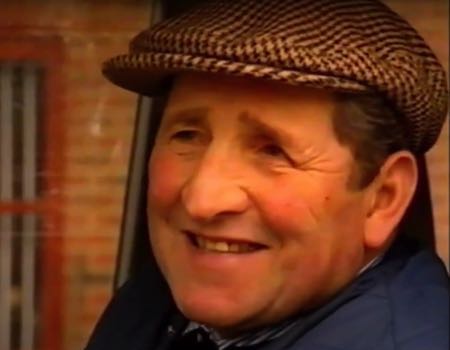
William Richard Hern was born in Holford, Somerset, on the 20th of January 1921. His route into racing was an unusual one, serving in the army during the Second World War, fighting in North Africa and Italy as a tank commander and reaching the rank of Major, which is why he was known as ‘The Major’ for the rest of his life. After the war, he turned to riding and coaching and in 1952 he was in charge of the British showjumping team that won gold at the Olympic Games in Helsinki. He then moved into racing as an assistant to Major Michael Pope, beginning to train in his own right in 1957.
His training career began in Newmarket and his first Classic victory came when Hethersett won the St Leger in 1962. That was also the year when he was crowned Champion Trainer for the first time. It was soon after that when he moved to West Ilsley in Berkshire, where he later trained for the Queen. He won 16 British Classics in all, including the Derby with Troy in 1979, Henbit in 1980 and Nashwan in 1989, becoming Champion Trainer four times, in 1962, 1972, 1980 and 1983. Brigadier Gerard lost only one of his 18 races and beat Mill Reef in the 1971 2,000 Guineas.
By 1989, Hern had been paralysed by a hunting fall, yet he trained Nashwan to win the Guineas, the Derby and the King George that summer. He died on the 22nd of May 2002.
Fred Winter
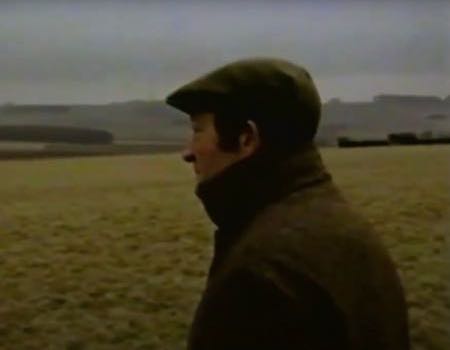
Born in Andover on the 20th of September 1926, Frederick Thomas Winter was the son of Fred Winter senior, a jockey who had won the Oaks in 1911 on Cherimoya. He rode on the flat as a boy and served as a lieutenant in the Parachute Regiment before switching to jump racing, where he was Champion Jockey four times and rode a then-record 923 winners before retiring in 1964. He won the Grand National on Sundew in 1957 and Kilmore in 1962. Then, in 1962, he won the Grand Steeple-Chase de Paris on Mandarin, despite the bit breaking at the fourth fence.
In 2006, Racing Post readers picked that effort as the finest ride of all time. Winter bought Uplands in Lambourn and began training in 1964, not having to wait long to taste victory. Jay Trump won the Grand National for him in 1965 and Anglo, a 50/1 shot, won it again a year later. He was Champion Trainer eight times during his career, including five seasons in a row from 1970-1971. His Champion Hurdle winners included Bula in 1971 and 1972 and Lanzarote in 1974. Midnight Court gave him the Cheltenham Gold Cup in 1978.
That made Winter the only person to win the Grand National, the Gold Cup and the Champion Hurdle as both a jockey and a trainer. A fall at home in 1987 ended his training career, and he died on the fifth of April, 2004.